
by Wayne Catucci on Sep 17, 2026, 10:30:01 AM
Introduction: Two Design Philosophies, One Built Environment
As laboratory, pharmaceutical, and industrial facilities become increasingly complex, the question isn't simply what should be built, it's who should lead the design process.
The architect-led project delivery model has long been the default, shaping how buildings are planned, documented, and executed. In many building types, this approach produces successful and even iconic results.
However, as facilities become increasingly complex and performance-driven, the question of who should lead design becomes strategic rather than procedural.
For performance-driven buildings, early engineering decisions often determine long-term success. Mechanical, electrical, plumbing, and process systems influence everything from safety and maintainability to energy efficiency and future expansion.
That's why many owners are shifting toward an engineering-led design approach for laboratories, pharmaceutical facilities, and other technically complex buildings.
What Architect‑Led Design Means in Practice
Architect-led design typically begins with architectural vision, spatial relationships, and massing decisions established early in the project lifecycle. Floor plans, ceiling heights, and major spatial adjacencies are often defined before engineering systems are fully developed. Mechanical, electrical, plumbing, and controls disciplines are then tasked with integrating complex systems within those predefined constraints.
This sequence has deep roots in traditional project delivery and works exceptionally well in buildings where experience, identity, and public presence are the dominant drivers.
However, in highly technical facilities, this structure often forces engineering solutions to adapt to decisions that were made without full visibility into system requirements. The result is not poor design intent, but rather a misalignment between early decisions and downstream performance needs.
Strengths and Limitations of Architect‑Led Delivery
Architect-led delivery excels in creating cohesive spaces with strong visual clarity and experiential intent. It is particularly effective for:
- Civic buildings
- Education facilities
- Commercial offices
- Public-facing spaces where form, symbolism, and human interaction are paramount.
In these environments, architecture appropriately serves as the organizing discipline.
The limitation arises when this same model is applied to facilities dominated by infrastructure. Complex MEP systems require space, access, redundancy, and logical distribution.
When these needs are accommodated after architectural form is fixed, compromises often follow:
- Mechanical rooms shrink
- Shaft space becomes constrained
- Ceiling congestion increases
- Maintainability suffers
These impacts may not be apparent during design review, but they become persistent operational challenges after occupancy.
What MEP Engineering‑Led Design Looks Like
MEP engineering-led design reverses the traditional sequence by starting with performance requirements.
Engineers establish system adjacencies, load drivers, pressure relationships, redundancy strategies, and distribution pathways early in the design process. Architecture is then developed to support these realities rather than constrain them.
In this approach, engineering defines how the building must function, and architecture defines how that function is housed, expressed, and experienced.
The result is a balanced design that prioritizes performance without sacrificing clarity or quality. Architecture remains essential, but it evolves in response to known system requirements rather than assumptions.
Performance as a First‑Order Design Driver
In technical facilities, building systems often determine the building, not the other way around.
In laboratories and industrial buildings, mechanical and electrical systems are not background infrastructure. Building design is often driven by requirements such as:
- Ventilation rates
- Exhaust strategies
- Cooling loads
- Utility routing
- Power density
These factors frequently determine building proportions long before finishes or architectural details are selected.
Engineering-led design acknowledges this reality and elevates these drivers to first-order decisions.
By allowing systems to define space early, conflicts are reduced and coordination becomes intentional. Floor-to-floor heights are based on real ceiling requirements. Structural grids align with major distribution pathways. System expansion is planned with clarity instead of placeholders. This reduces uncertainty and ensures the building can perform as intended rather than operating at the limits of compromise.
Early Engineering Decisions Reduce Late‑Stage Pain
One of the greatest advantages of engineering-led design is that it resolves critical system decisions before they become expensive redesigns.
When system requirements are resolved early, downstream disciplines operate within a stable and realistic framework. This stability minimizes change orders, reduces coordination friction, and improves schedule predictability.
Late-stage coordination is where cost and risk concentrate. Discovering insufficient shaft space or ceiling congestion late in design often forces difficult trade-offs, including structural changes or performance-reducing value engineering.
The result is a project that is easier to coordinate during design and easier for owners to build, operate, and maintain over the long term.
Owner and Operator Value Over the Building Lifecycle
For owners and operators, engineering-led design delivers benefits that extend far beyond initial construction. It creates facilities that are:
- Facilities are easier to operate
- Easier to maintain
- More resilient to change
- Equipment is accessible
- Valves, dampers, and panels can be serviced
Because infrastructure is properly planned from the beginning, systems are more likely to operate as intended rather than under constant stress.
Energy efficiency and system reliability are also improved when infrastructure is not constrained by inadequate space or forced routing. Redundancy strategies are preserved, controls are more intuitive, and maintenance staff can safely access and service critical building systems. These benefits may not be visible on day one, but they compound throughout the life of the building.
Why Biopharmaceutical Labs Need Engineering-Led Design
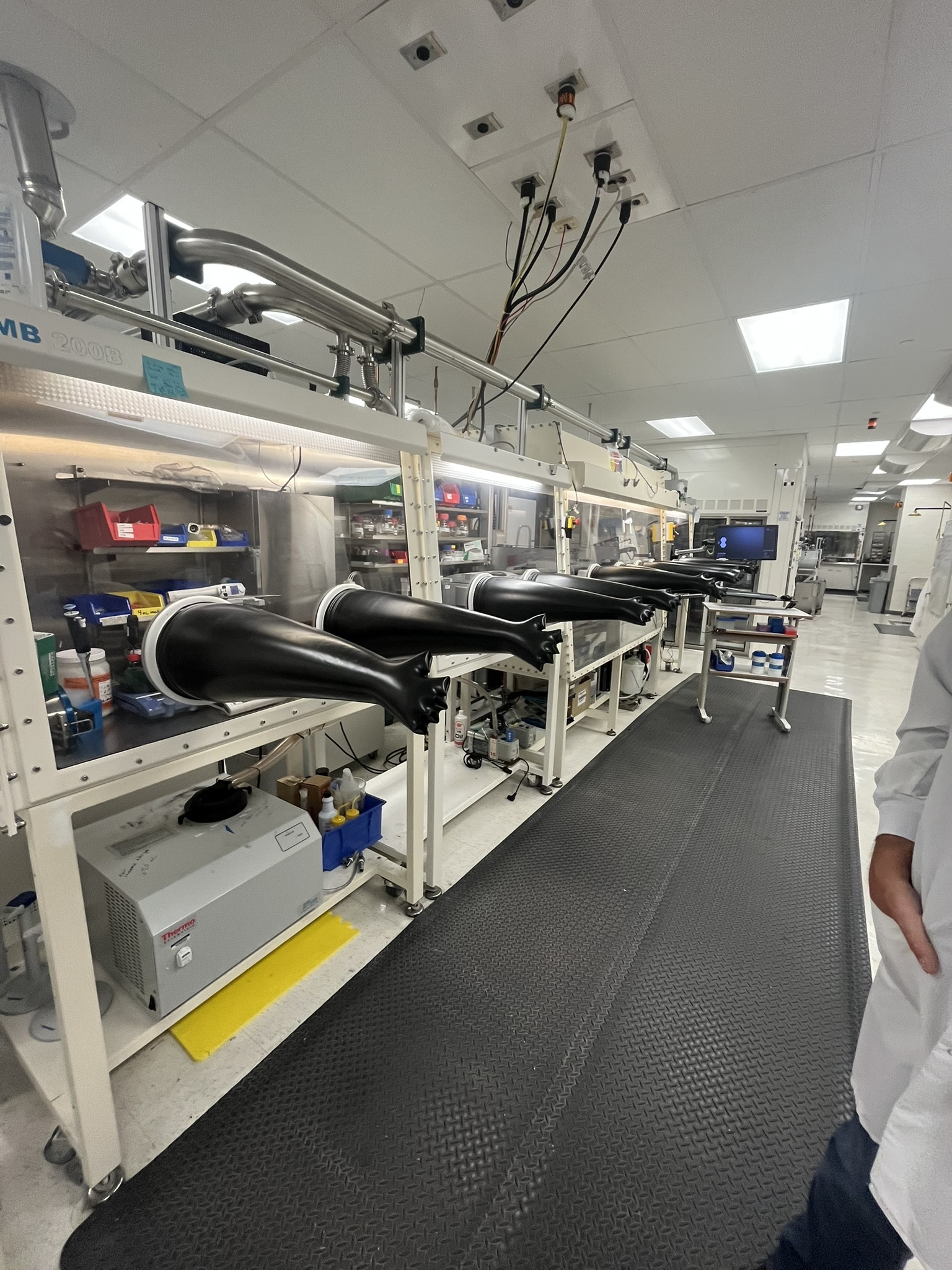
Biopharmaceutical and research laboratories are among the clearest examples of where engineering must lead design.
Ventilation alone drives room sizing, adjacencies, ceiling heights, and shaft requirements. Pressurization relationships, containment strategies, and exhaust routing are safety- and code-driven constraints that cannot be resolved after architectural decisions are finalized.
Engineering-led design ensures these requirements are established before form is fixed. This approach minimizes rework, reduces regulatory risk, and results in safer, more adaptable laboratories.
As research programs evolve, facilities designed around system logic rather than forced accommodation are far better positioned to respond.
Our New Laboratory Engineering Design case study demonstrates how early engineering coordination helped create a laboratory designed around performance, flexibility, and future operational needs.
Advanced Technology and Clean Manufacturing Facilities
Advanced technology facilities face different but equally rigid constraints, including:
- Power density
- Cooling requirements
- Uptime expectations
Electrical and mechanical infrastructure then influences structural layout, room adjacencies, and future expansion.
Industrial and Process‑Driven Environments
In industrial facilities, the building is often an enclosure for a process rather than the primary product. Material flow, equipment layout, and utilities define both form and function. Attempting to impose architectural form without full process integration frequently leads to inefficiencies that persist for decades.
Engineering-led design embraces this reality. When process and utilities lead, architecture can focus on clarity, safety, and usability without competing with operations. The resulting facilities are more efficient, safer for occupants, and easier to modify as processes evolve.
The Hidden Cost of Making the Systems Fit
Many of the most expensive design decisions are invisible in renderings and marketing images. Congested ceilings, inaccessible equipment, undersized shafts, and compromised redundancy rarely affect appearance, but they dominate operational performance. These challenges are often framed as construction issues, when in reality, they originate in early design sequencing.
Addressing these constraints early allows project teams to resolve them deliberately rather than reactively. Rather than hiding complexity, this approach organizes it. The result is greater transparency for contractors, operators, and owners, creating buildings that are easier to understand, operate, and defend from a technical standpoint.
Engineering‑Led Does Not Mean Engineering‑Only
Engineering-led design does not diminish architecture; it strengthens it. Successful projects rely on architects to humanize technical buildings, improve wayfinding, enhance safety, and elevate user experience. The difference is that architectural creativity is applied within a performance-driven framework, not at the expense of it.
The strongest outcomes occur when engineers define what must happen and architects define how it is expressed. This collaboration produces buildings that are both functional and dignified, without forcing trade-offs that undermine long-term value.
When Architect‑Led Design Is Still the Right Choice
There are many building types where architect-led design remains appropriate and effective. Cultural institutions, civic buildings, educational campuses, and public spaces often prioritize experience, symbolism, and identity over technical intensity. In these projects, architecture appropriately leads and engineering supports.
The key distinction is not superiority, but suitability. Design leadership should be chosen based on building purpose, not habit.
Conclusion: Let the Building Decide Who Leads
The question is not whether architects or engineers are more important. It is whether design leadership aligns with how the building will be used.
As facilities become more complex and performance-driven, engineering leadership becomes increasingly critical.
For laboratories, advanced technology, and industrial environments, engineering-led design consistently delivers safer, more reliable, and more adaptable buildings.
Frequently Asked Questions About Engineering-Led Building Design
What is engineering-led building design?
Engineering-led building design is an approach in which mechanical, electrical, plumbing (MEP), and other technical system requirements are established early in the design process. By defining performance needs before finalizing the building layout, project teams can create facilities that are safer, more maintainable, and better suited to long-term operational requirements.
When is an engineering-led design approach most beneficial?
Engineering-led design is particularly valuable for laboratories, pharmaceutical facilities, industrial plants, advanced technology environments, and other performance-driven buildings where HVAC, process utilities, electrical systems, ventilation, and life safety requirements significantly influence the building's design.
Does engineering-led design replace the architect's role?
No. Engineering-led design does not replace architecture. Instead, it encourages architects and engineers to collaborate from the earliest stages of a project. Engineers establish the technical requirements needed for building performance, while architects create spaces that are functional, efficient, and visually appealing.
How does engineering-led design benefit building owners?
By resolving critical system requirements early, engineering-led design can reduce redesign, improve coordination, support maintainability, preserve energy efficiency, and make future renovations easier. The result is a building that performs more reliably throughout its lifecycle while helping owners avoid unnecessary operational challenges.
Why are laboratories and industrial facilities different from traditional commercial buildings?
Unlike conventional office or commercial buildings, laboratories and industrial facilities are often driven by ventilation requirements, process utilities, power demands, containment strategies, equipment layouts, and other technical systems. These requirements frequently determine the building's configuration, making early engineering coordination essential to long-term performance.
About the author
Wayne Catucci is a Lead Mechanical Engineer and Project Manager at Hallam-ICS with more than 13 years of experience in HVAC and mechanical engineering. He specializes in the planning, design, and delivery of laboratory, biopharmaceutical, and other highly regulated facilities, helping owners balance safety, reliability, energy efficiency, and lifecycle cost.
Read My Hallam Story
About Hallam-ICS
Hallam-ICS is an engineering and automation company that designs MEP systems for facilities and plants, engineers control and automation solutions, and ensures safety and regulatory compliance through arc flash studies, commissioning, and validation. Our offices are located in Massachusetts, Connecticut, New York, Vermont, North Carolina, and Texas, and our projects take us world-wide.

Looking Back On 2017-Creative Ideas For 480V Relay Protection
The Hidden Financial Impact of Laboratory Ventilation Design

No Comments Yet
Let us know what you think