
by Alvaro Cezon-Gimenez on Aug 25, 2026, 10:30:00 AM
We, as engineers, are as eager to design, build, and test our ideas as a kid opening birthday presents. Once we get that one idea in our heads, we quickly get to work before it slips away. In the process, however, we forget to answer one simple question: How did I come to this conclusion?
A few months pass and your team member comes to you with questions about your design. They want to know why you made one decision instead of considering an alternative. You’ll look at them puzzled and reply “I don’t remember why I chose this”. You fire up the laptop and spend the next 30 minutes digging through OneDrive only to realize you never documented anything. Now you’re not only questioning your own decisions, but you have set yourself back.
At first, I believed the final design was the end of the engineering process. I have since learned that real engineering continues far into documentation and organization that allows future engineers to understand, improve, and redesign upon what was once your work.
My Experience as a Formula SAE member
For the past two years, I have been a member of my school’s Formula Society of Automotive Engineers (SAE) team. During that time, we built the first two electric race cars in UConn history, passed every technical inspection at the Formula Electric Competition 2025 & 2026 and placed within the top 5 best electric race cars in North America.
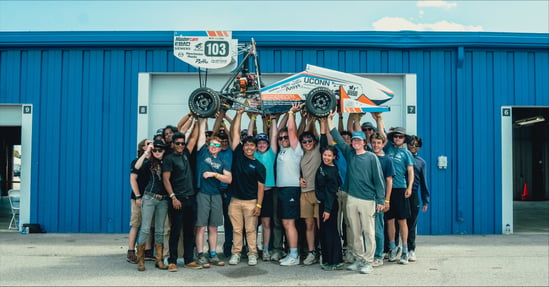
Quite the resume, right? You’d expect that with accomplishments like these, the team is incredibly organized and ready for the next season. Well that isn’t actually the case.
Since launching the EV program, the team has been so focused on getting the car on track that much of the knowledge behind our design decisions exists only in the minds of graduating engineers.

Looking ahead into next semester, I have the incredible opportunity to serve as the EV Powertrain lead, something I never imagined when I first walked through the shop doors. But with that opportunity comes a difficult question “Do I actually know enough to lead an entire system?”
After two years, hundreds of hours spent on CAD and Finite Element Analysis (FEA), and hands on manufacturing experience, I still couldn’t tell you how we sized our radiator. I could not tell you why we chose a 3.6:1 gear ratio. I know what the system looked like, how to manufacture it and assemble it together yet I’ve been building the same system simply because someone before me said it was the right way.
How documentation Creates Better Engineers
When a new member walks through the shop doors, I want to be able to hand them a binder containing everything from motor specifications and bearing loads to mount deflection and cooling requirements. They will not understand everything on day one, and that's okay. When the time comes to
design a differential mount or size a cooling system, they'll have the resources to understand not only what we did, but why we did it.
By documenting the work completed each year, we create a foundation for the next generation of engineers to build upon. Instead of repeating the same calculations or making decisions based on word of mouth, they can spend their time improving the design. Rather than starting from scratch every season, they can start one step ahead.
What My Internship at Hallam-ICS Taught Me About Organization
Documentation extends far beyond collegiate racing teams. From my very first day in May, I realized that the best engineers are not only skilled designers but also organized communicators. Monday mornings were occupied with team meetings to discuss project updates, ask questions, and make sure everyone is on the same page for the week.
Whenever I had a question, someone always knew exactly where to find the answer. Whether it was Hallam Standards, ASHRAE Standards, codes, or past project documentation, everything had its place. Organization at that level means that even an intern could navigate through projects with confidence, relying not only on experienced engineers but also resources at their disposal.
So, the next time that you are working on a new design for anything it may be, remember my experience. Take the extra step that seems tedious because one day you’ll thank yourself for it. In doing so, you won’t just become a better engineer, you’ll become a more responsible one.
Frequently Asked Questions About Engineering Documentation
Why is documentation important in engineering?
Documentation captures the reasoning behind engineering decisions, calculations, assumptions, and design changes. It allows future engineers to understand how a solution was developed, reduces the risk of repeating work, and makes it easier to maintain, improve, or troubleshoot systems over time.
What should engineers document during a project?
Good engineering documentation typically includes design calculations, assumptions, standards used, equipment selections, meeting notes, design revisions, and the rationale behind key decisions. Recording both what was done and why it was done creates a valuable reference for future projects and team members.
How does documentation improve future engineering projects?
Well-organized documentation helps future engineers build upon previous work instead of starting from scratch. It preserves institutional knowledge, supports collaboration, reduces errors, and allows teams to spend more time improving designs rather than recreating past analyses.
Why is knowledge transfer important in engineering?
Engineering knowledge transfer ensures that valuable experience is not lost when projects are completed or team members move on. By documenting design decisions, lessons learned, and best practices, organizations can improve consistency, accelerate onboarding, and support continuous improvement across future projects.
About the author
Alvaro is a Mechanical Engineering Co-op at Hallam-ICS, working with the Mechanical Engineering team in the Mansfield, Massachusetts office. A rising senior at the University of Connecticut pursuing a bachelor's degree in Mechanical Engineering, Alvaro supports projects for clients throughout the region. Outside of his internship, he serves as the incoming EV Powertrain Lead for UConn's Formula SAE team, helping design and develop the university's electric race car.
About Hallam-ICS
Hallam-ICS is an engineering and automation company that designs MEP systems for facilities and plants, engineers control and automation solutions, and ensures safety and regulatory compliance through arc flash studies, commissioning, and validation. Our offices are located in Massachusetts, Connecticut, New York, Vermont, North Carolina and Texas and our projects take us world-wide.
Engineering Success: What School Doesn’t Teach You About the Industry

What an SDS Doesn’t Tell You About Combustible Dust

No Comments Yet
Let us know what you think